

 Bahasa inggris
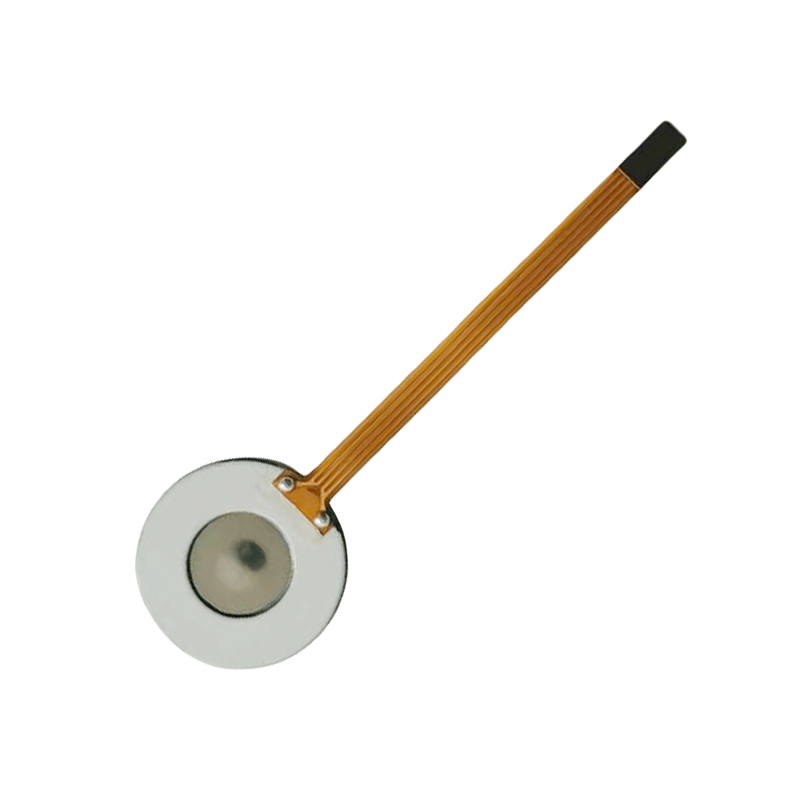
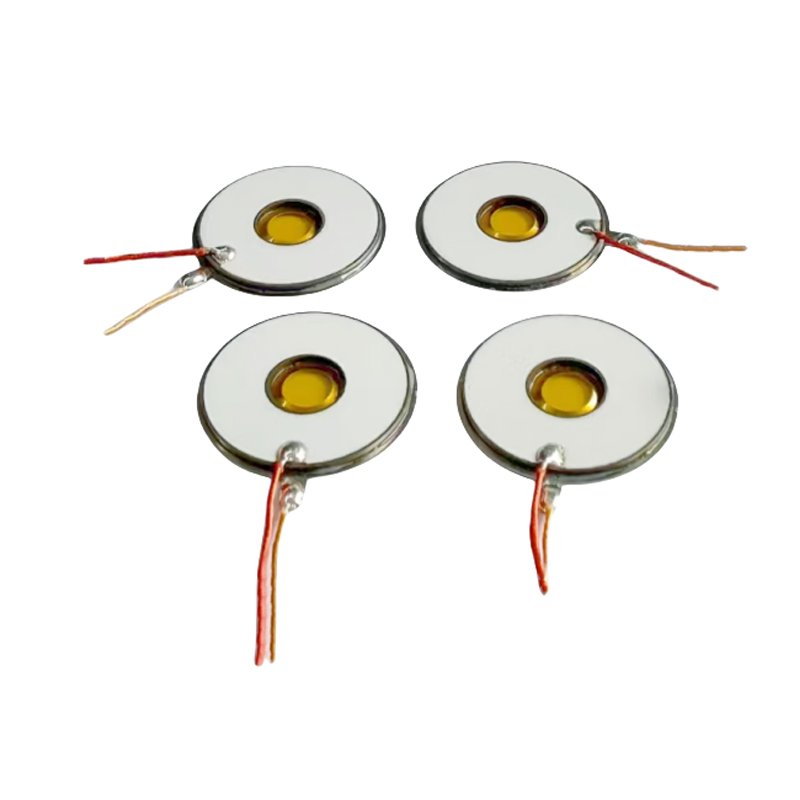
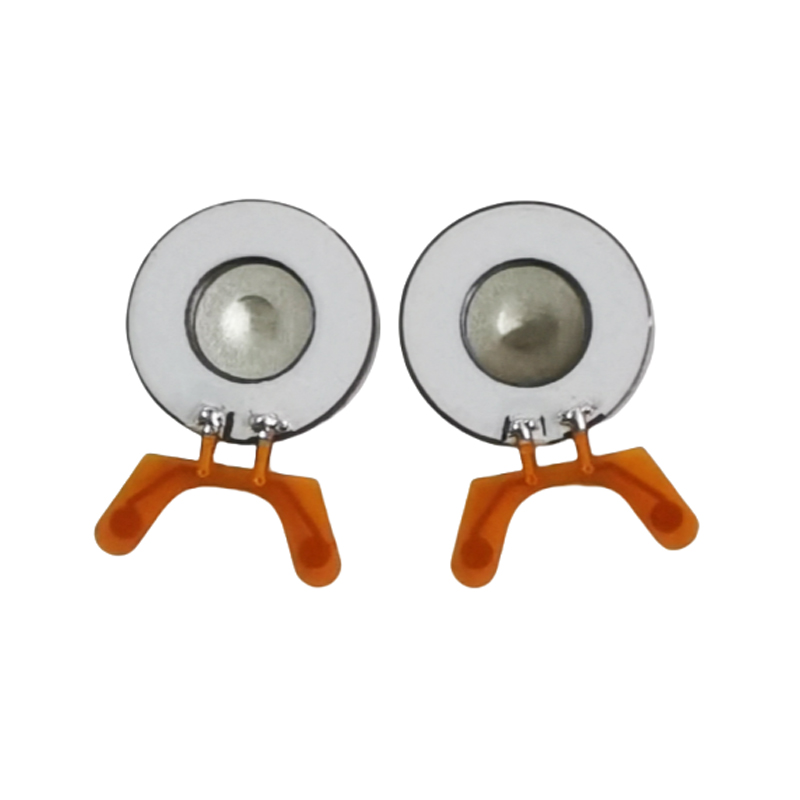
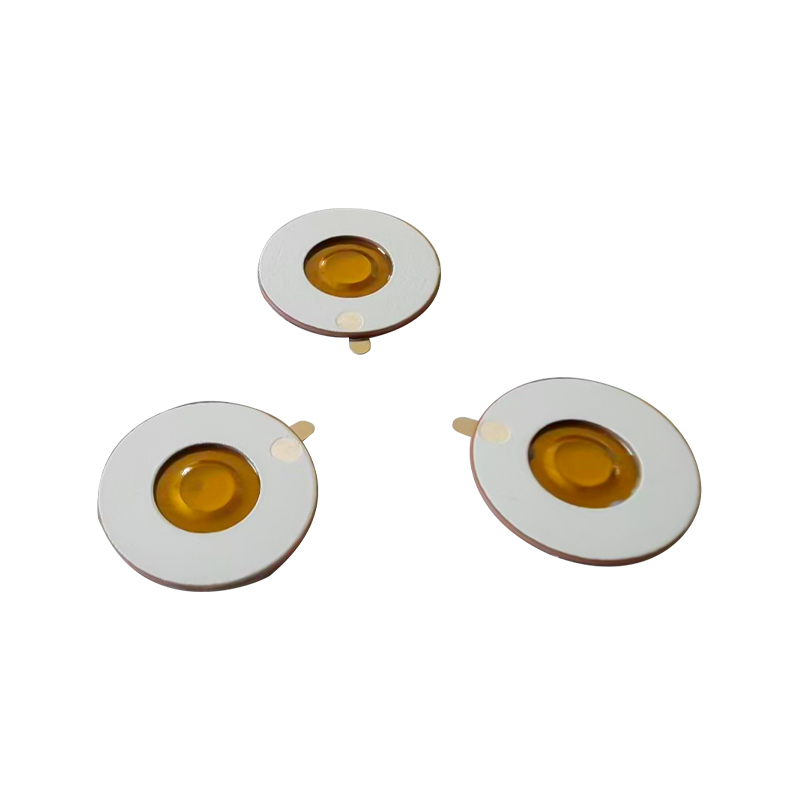
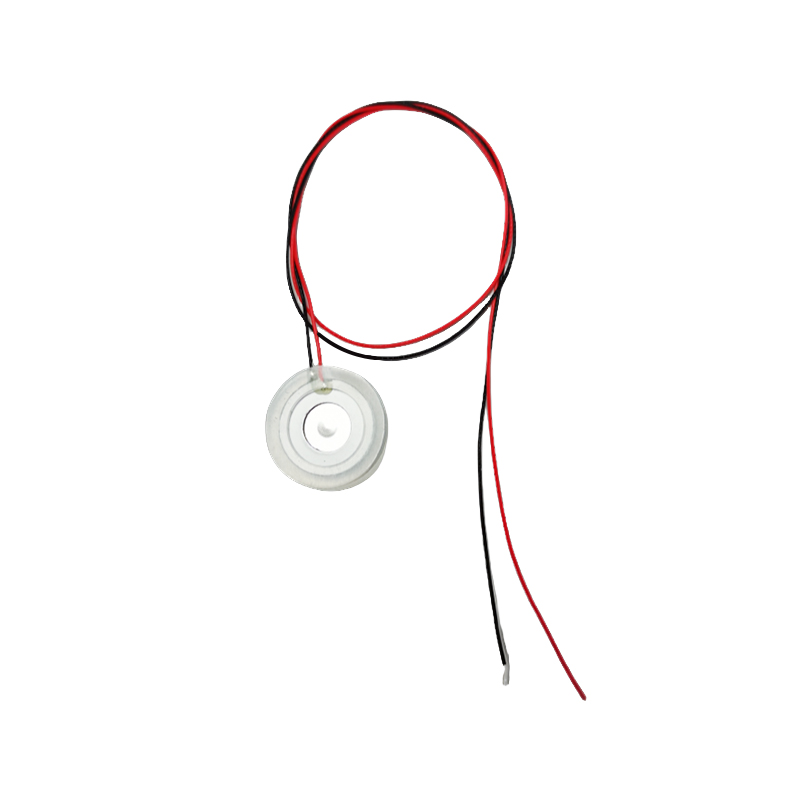
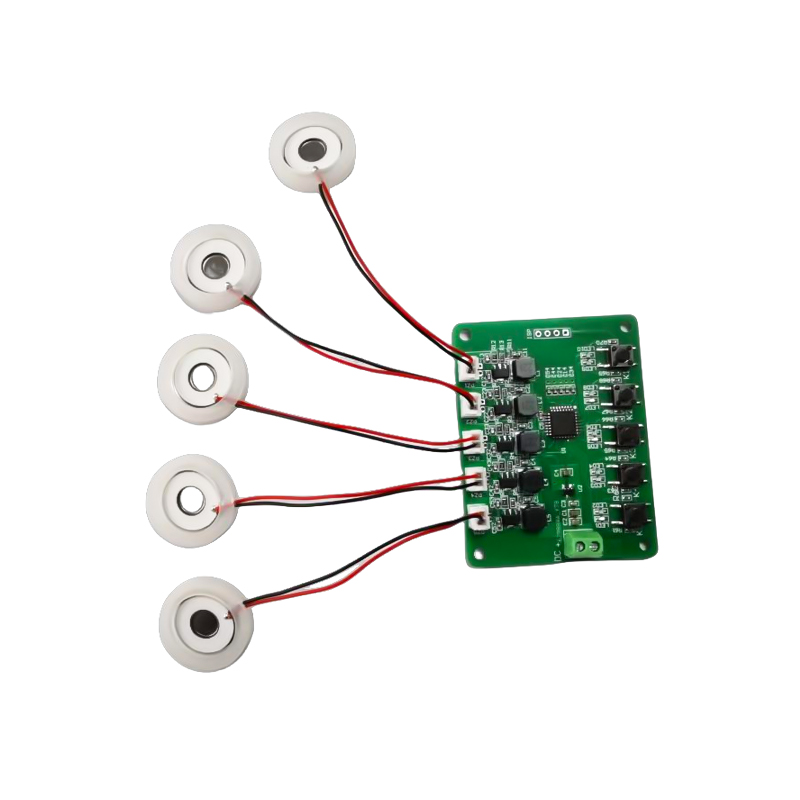
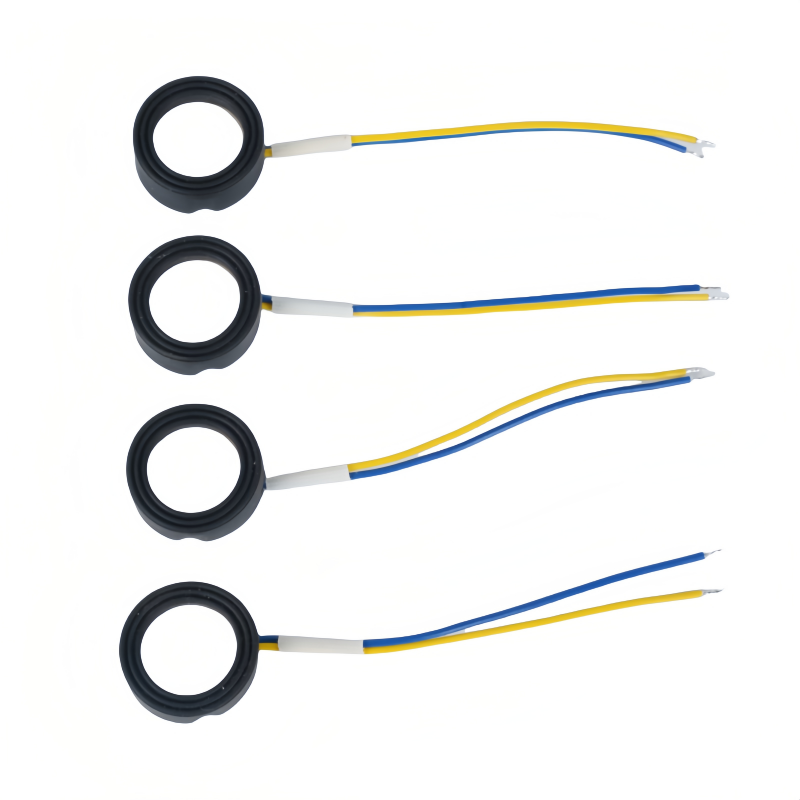
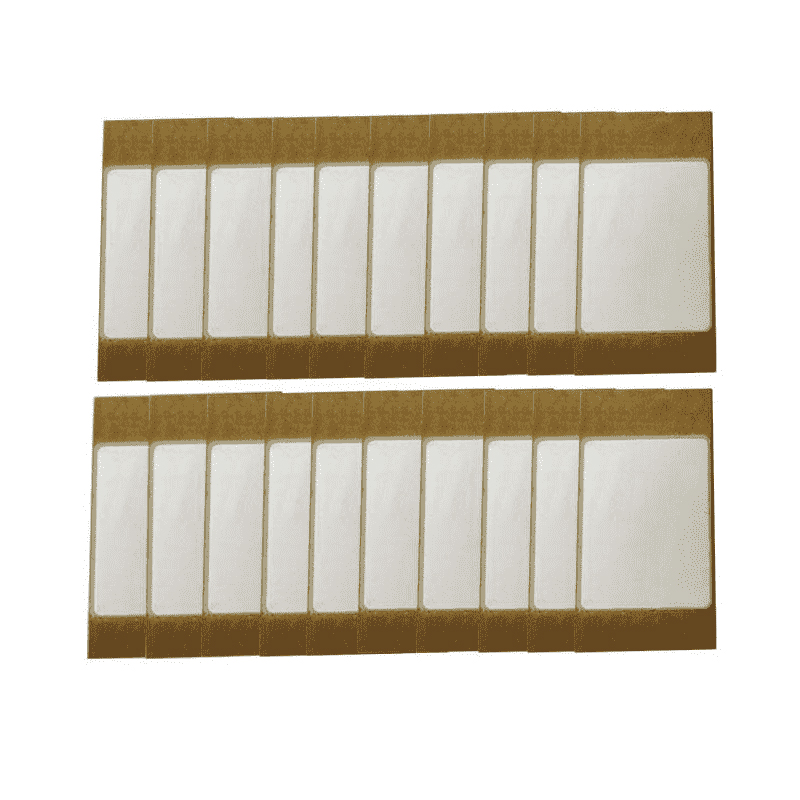
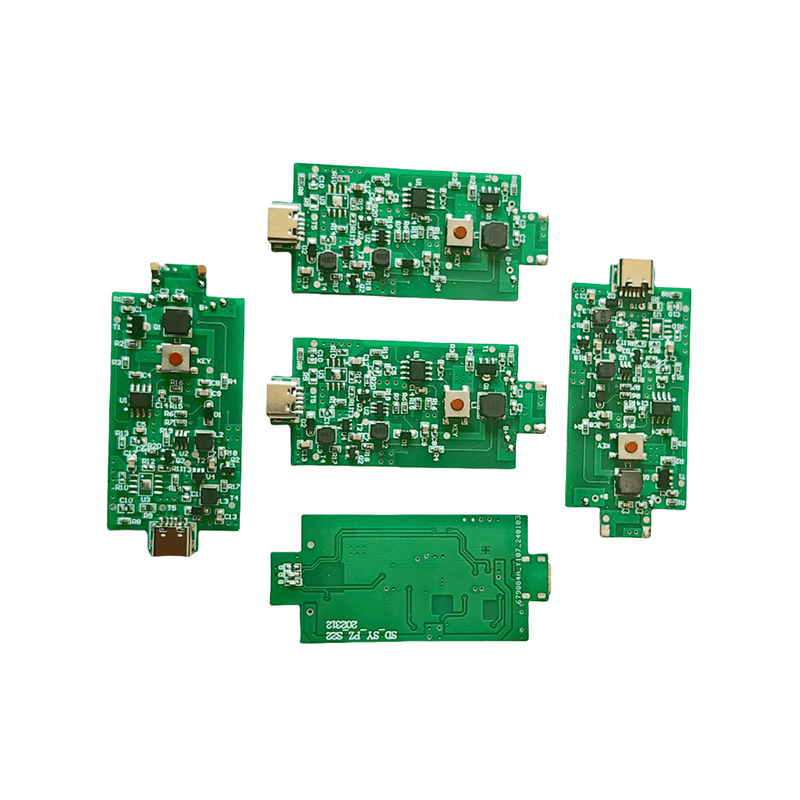
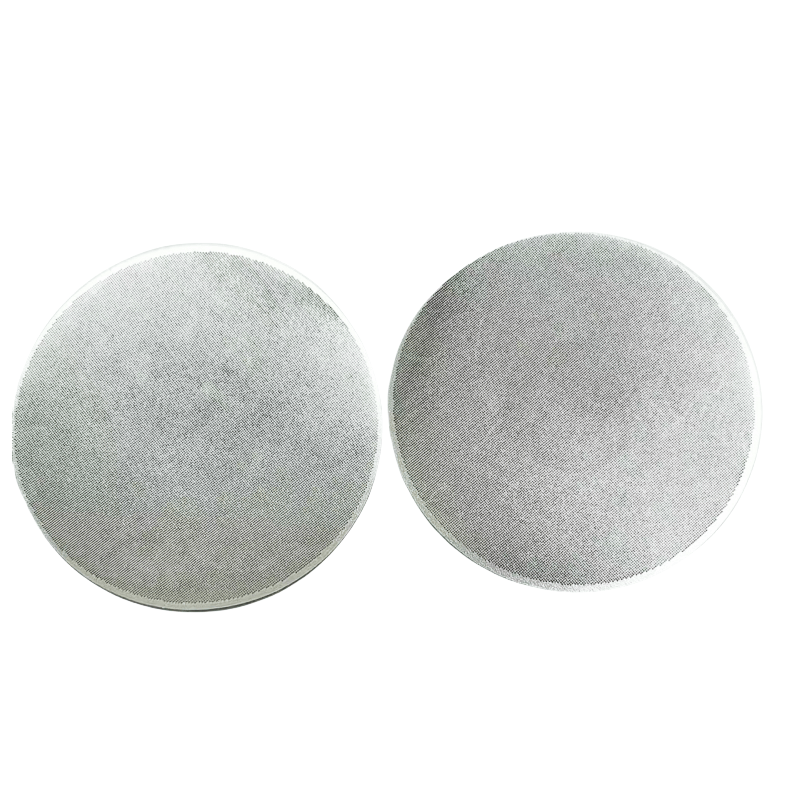
Teknologi Pemrosesan Lubang Mikro Laser Presisi Produsen
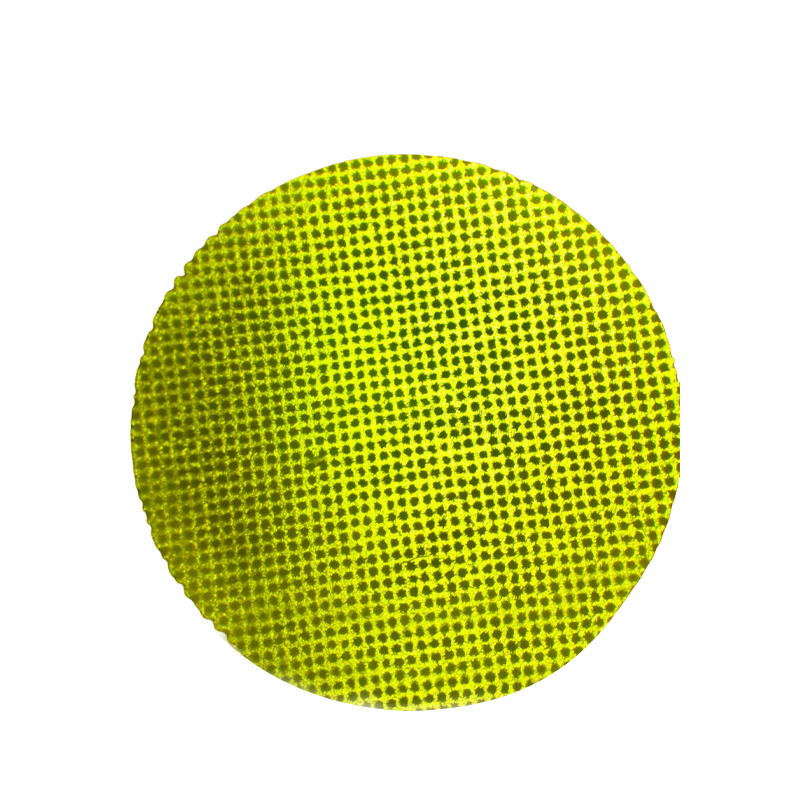
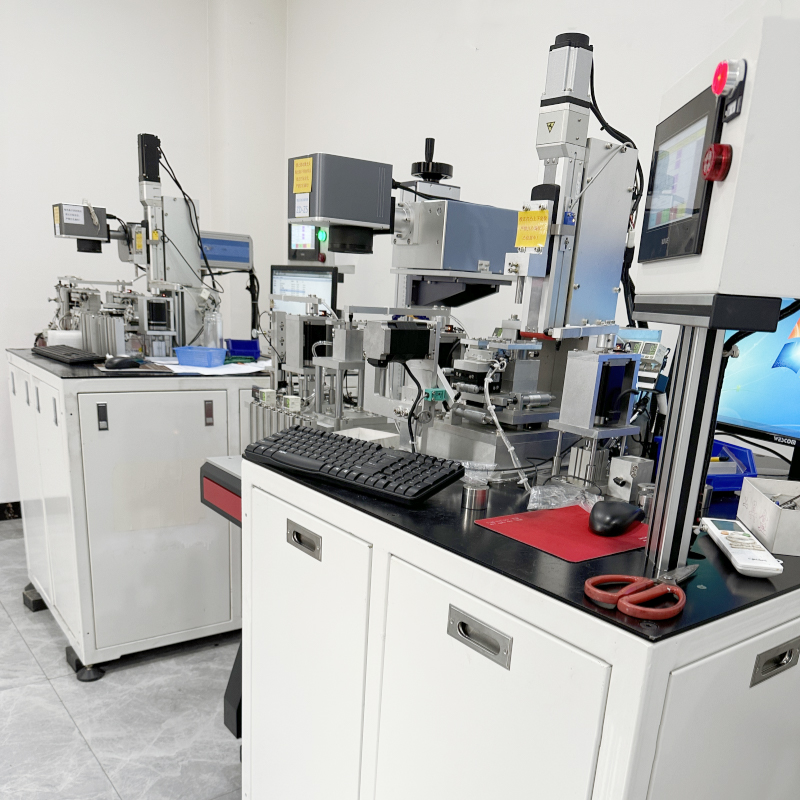
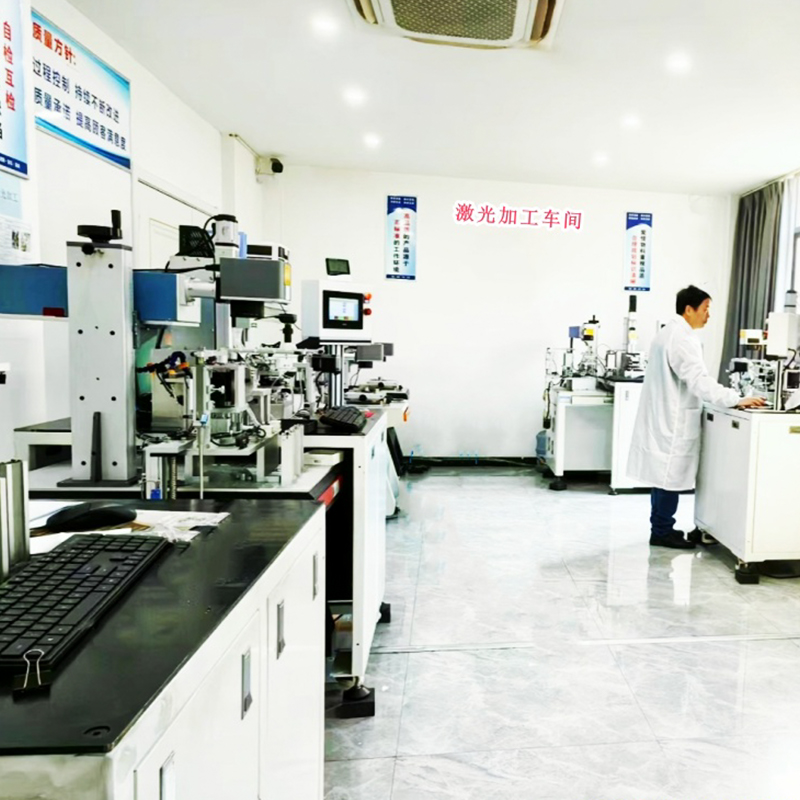
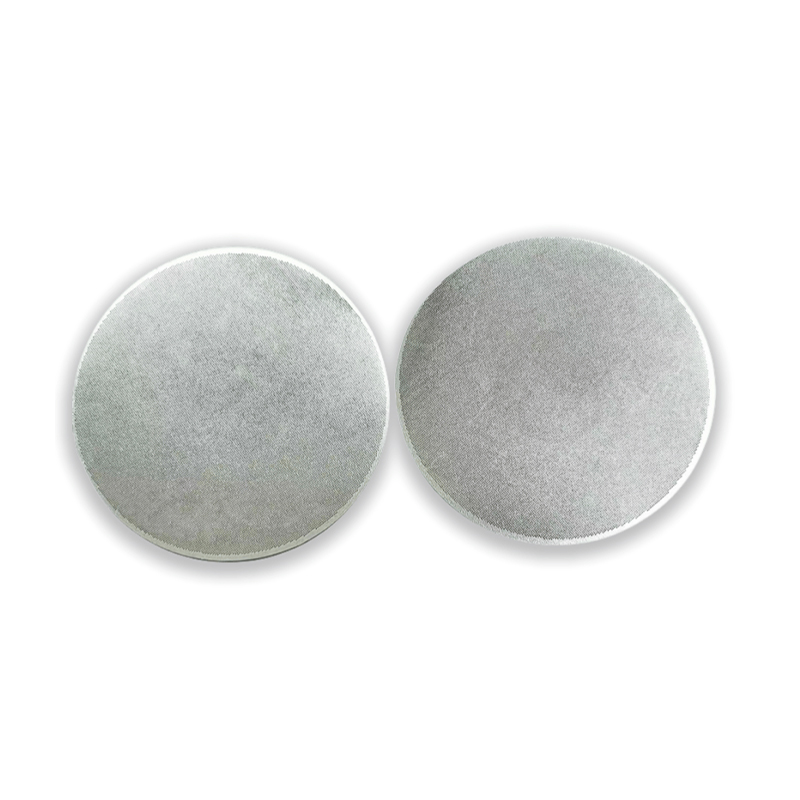
Pemrosesan mikropori laser dapat disesuaikan untuk pelanggan dengan kebutuhan mikropori presisi yang berbeda, mikropori terkecil kami φ2μm mikropori maksimum φ30um memiliki akurasi pemrosesan yang sangat tinggi, berlaku untuk bahan baja tahan karat, dan bahan paduan titanium. Kami dapat mewujudkan bentuk mikropori yang kompleks dan tata letak susunan untuk memenuhi persyaratan ketat pemrosesan mikropori untuk filter elektronik kelas atas, filter pemurni air, peralatan medis, instrumen presisi, dan industri lainnya.
Saida Piezoelectric adalah perusahaan berbasis teknologi yang diakui secara global, mengkhususkan diri dalam produksi dan manufaktur produk terkait atomisasi medis, kami adalah China Teknologi Pemrosesan Lubang Mikro Laser Presisi Produsen dan Kustom OEM/ODM Teknologi Pemrosesan Lubang Mikro Laser Presisi Perusahaan, Kami telah berkomitmen pada inovasi, penelitian dan pengembangan, serta promosi piezoelektrik keramik ultrasonik, produk atomisasi bebas timbal, komponen elektronik, dan solusi desain PCBA terkait. Tujuan kami adalah meningkatkan kualitas hidup masyarakat melalui teknologi, dan mewujudkan masa depan yang lebih efisien, hijau, dan berkelanjutan bagi masyarakat.
Sejak didirikan pada April 2011, perusahaan telah berada di garis depan pengembangan teknologi, dengan tim penelitian dan pengembangan yang luar biasa, peralatan produksi dan manufaktur canggih, serta peralatan pengujian presisi. Kami mencakup berbagai produk atomisasi ultrasonik di bidang profesional kami, termasuk tablet atomisasi inhalasi medis berbasis timbal dan bebas timbal, tablet atomisasi humidifier, tablet atomisasi minyak esensial, tablet atomisasi industri, serta produk sensing terkait piezoelektrik ultrasonik dan solusi penggerak PCBA. Kami tidak hanya fokus pada penelitian dan pengembangan teknologi mendalam, tetapi juga secara aktif menerapkan pencapaian teknologi ke dalam kehidupan nyata, sehingga produk teknologi benar-benar dapat melayani dan bermanfaat bagi masyarakat, menjadikan dunia lebih menarik dan indah.
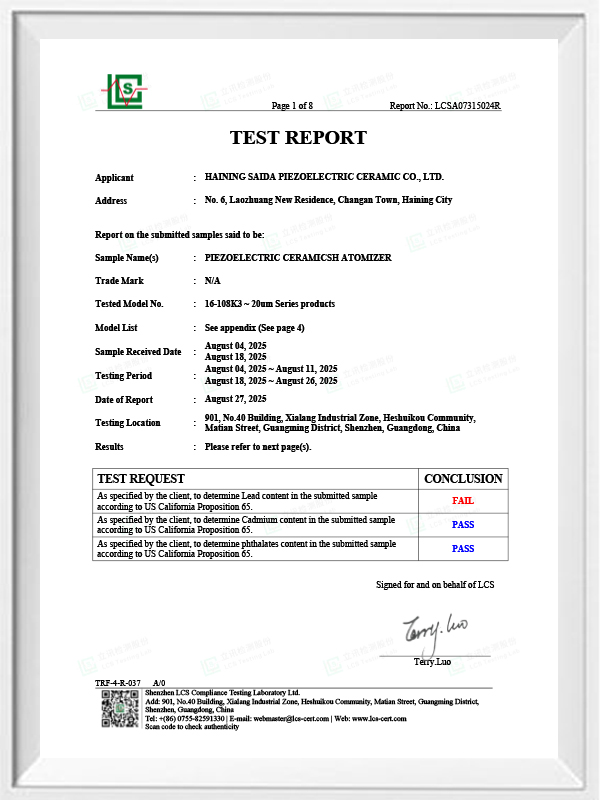
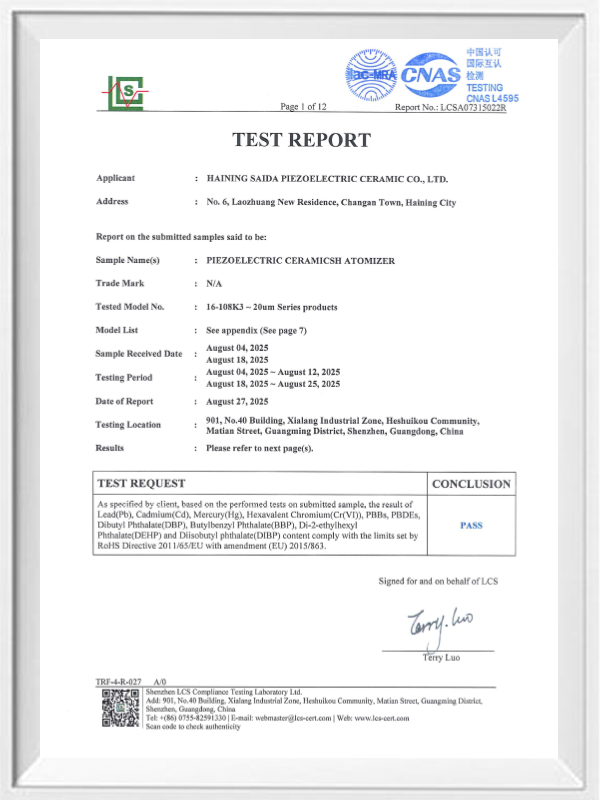
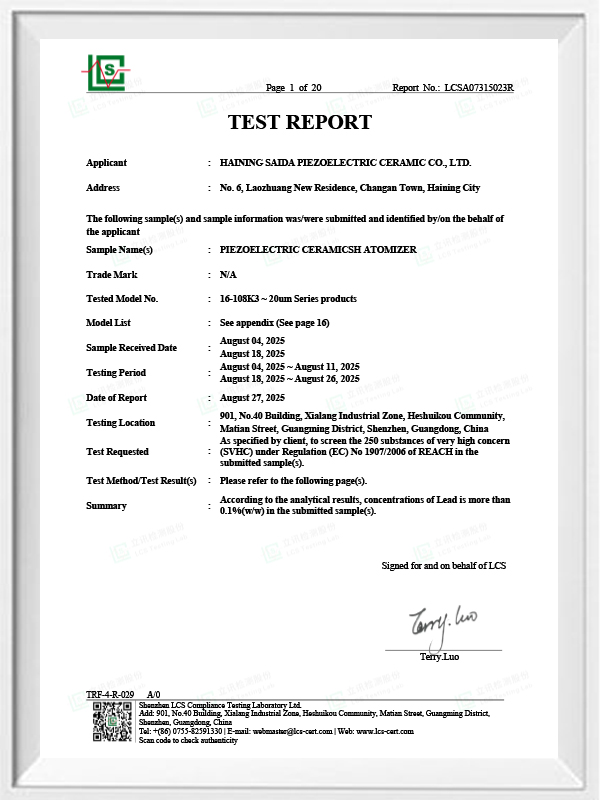
Sertifikasi

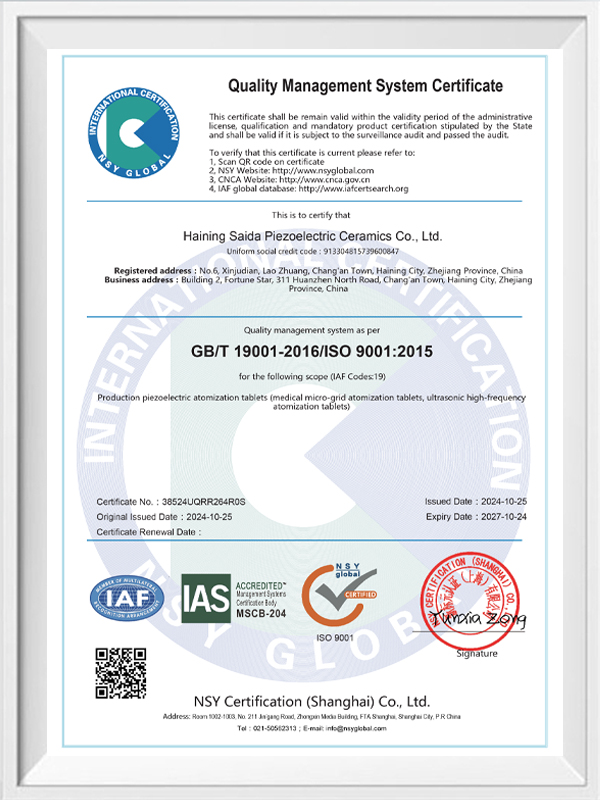
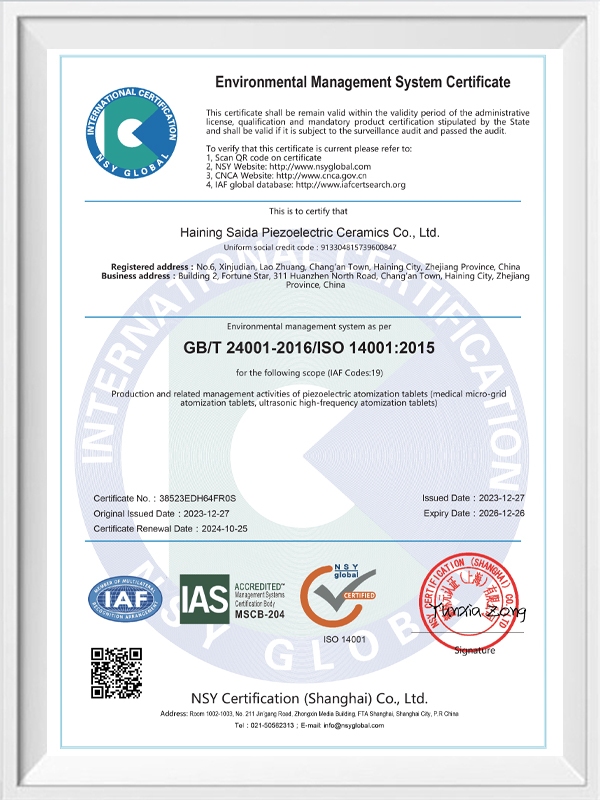
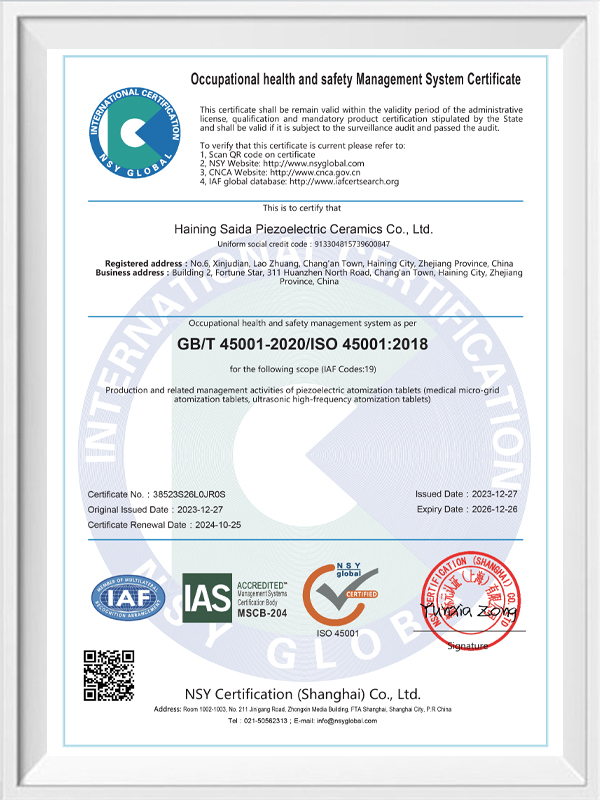
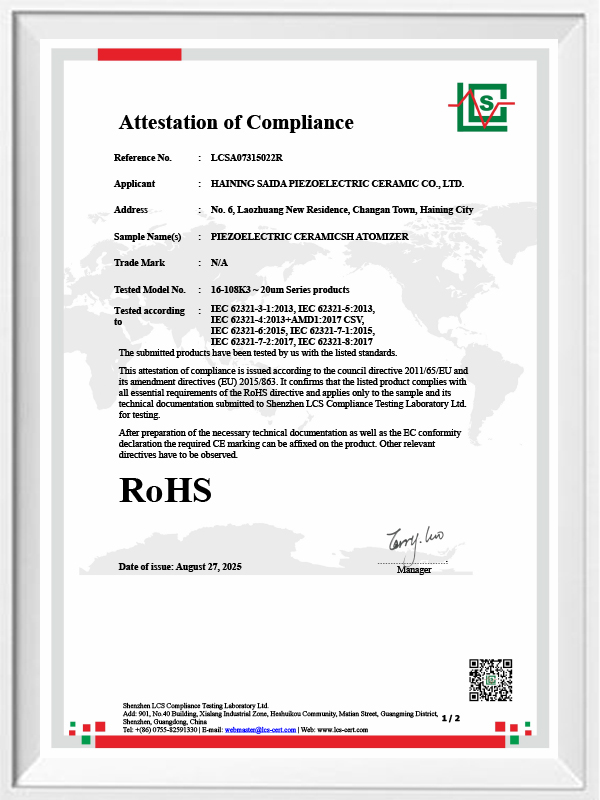
Produk seri atomisasi piezoelektrik inhalasi medis perusahaan kami semuanya telah lulus sertifikasi yang diperlukan untuk standar ekspor. Sertifikasi tersebut meliputi sertifikasi ROHS, sertifikasi sistem mutu ISO9001, sertifikasi sistem kesehatan GB/T45001-2020/ISO 45001:2018, GB/T28001-2001 idt OHSAS18001:1999 Sertifikasi Kesehatan dan Keselamatan Kerja, sertifikasi sistem lingkungan GB/T24001-2016/ISO 14001:2015, California Proposition 65, REACH, dan produk atomisasi medis juga telah disertifikasi oleh FDA AS.
berita
-
Berita industri
Mengapa Desain PCB Tingkat Medis Mendefinisikan Kinerja Al...
Mengapa Desain PCB Mendefinisikan Kinerja Atomisasi pada Peralatan Medis Dalam alat penyemprot piezo, jaring atau cakram yang bergetar mendapat perhatian. PCB sering diperlakukan sebagai komponen pendukung. A...
-
Berita industri
Apa yang Membuat Microvias Laser Presisi Menentukan Kinerj...
Dimana Akurasi Lubang Mikro Menentukan Kualitas Kabut Alat penyemprot piezoelektrik mengubah energi listrik menjadi semprotan halus dengan menggetarkan jaring logam tipis pada frekuensi tinggi. Karakter kabut...
-
Berita industri
Cara Memilih Chip Nebulizer Mesh yang Tepat untuk Alat Kes...
Itu chip nebulizer jala lebih dari sekadar aksesori sederhana. Inti rekayasa inilah yang menentukan efisiensi aerosol, konsistensi pemberian obat, masa pakai perangkat, dan kepatuhan terhadap peraturan d...
Teknologi Pemrosesan Lubang Mikro Laser Presisi Perluasan Pengetahuan Industri
How do parameters such as laser power, pulse frequency, and scanning speed affect the quality of Precision Precision Laser Micro-hole Processing Technology Technology?
Influence of laser power
Laser power is one of the core parameters that determine the processing effect. It directly determines the energy density of the laser beam when it acts on the material. Too high power may cause excessive melting or even vaporization of the material, resulting in irregular hole walls or expansion of the heat-affected zone (HAZ); while too low power may not effectively penetrate the material, resulting in processing failure. Accurate control of laser power is the key to achieving high-quality micro-hole processing.
In our Precision Precision Laser Micro-hole Processing Technology Technology, we use advanced laser equipment and precision control systems to ensure high-precision micro-hole processing on materials such as stainless steel and titanium alloys. For example, our Precision Precision Laser Micro-hole Processing Technology Technology technology can achieve micro-holes with a minimum of φ2μm and a maximum of φ30μm, meeting the strict requirements of medical devices and precision instruments for micro-hole size. This high-precision processing capability has been widely used in products such as medical atomizers and water purifier filters.
The selection of laser power also needs to consider the characteristics of the material. For example, for high reflectivity materials (such as copper and aluminum), we adjust the laser power and wavelength to reduce reflection loss and ensure processing efficiency and quality. For heat-sensitive materials, we reduce the heat-affected zone and avoid material deformation or damage by reducing power and optimizing processing parameters.
The role of pulse frequency
The pulse frequency determines the number of times the laser energy acts on the material per unit time. High pulse frequency can improve processing efficiency, but may cause heat accumulation and affect the quality of the hole wall; low pulse frequency helps to reduce the heat-affected zone, but will reduce the processing speed. The choice of pulse frequency requires finding a balance between efficiency and quality.
In our processing, we rely on advanced automatic laser drilling machines and precision testing equipment to flexibly adjust the pulse frequency according to customer needs. For example, in the manufacture of medical atomizers, we ensure the consistency of micropore shape and array layout by accurately controlling the pulse frequency, thereby improving the performance and reliability of the product. For micropore processing of complex shapes, we achieve high-precision processing effects by adjusting the pulse frequency and laser energy distribution.
The pulse frequency is closely related to the thickness and hardness of the material. For thicker or harder materials, we usually use higher pulse frequencies to improve processing efficiency; for thinner or softer materials, we use lower pulse frequencies to reduce the heat-affected zone.
Optimization of scanning speed
The scanning speed directly affects the residence time of the laser beam on the material surface. Too fast speed may lead to insufficient processing and incomplete micropores; too slow speed may cause overheating of the material, resulting in rough or deformed hole walls. Optimization of scanning speed is an important part of achieving high-quality micropore processing.
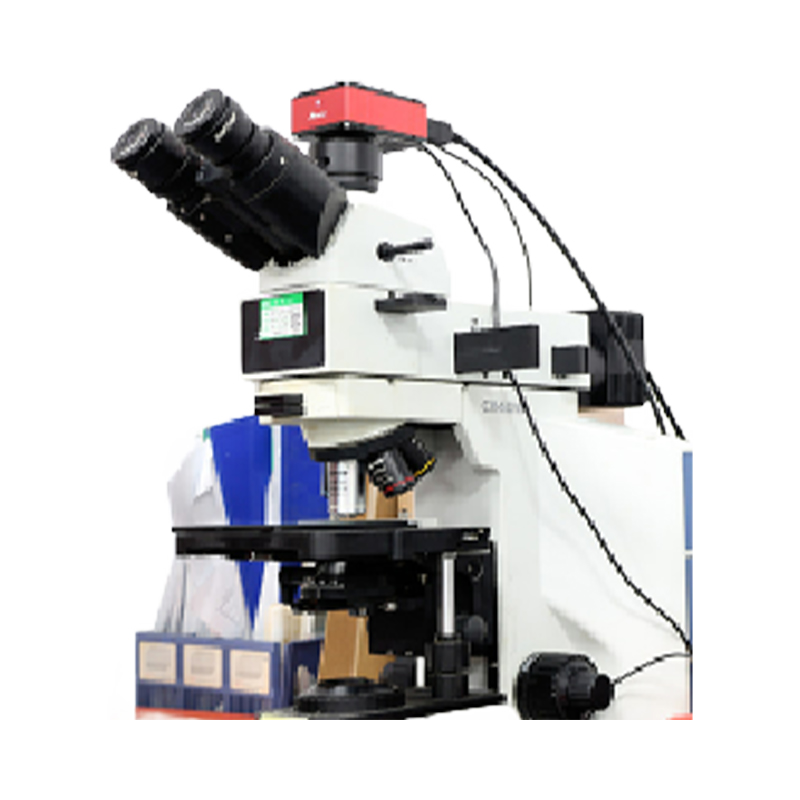
In our process flow, we optimize the scanning speed and combine testing equipment such as particle analyzers and metallographic microscopes to ensure that each process meets the highest standards. For example, in the micropore processing of water purifier filter elements, we achieve high-precision processing of complex micropore shapes by accurately controlling the scanning speed to meet customers' requirements for material physical and chemical properties and high-precision geometric dimensions.
The selection of scanning speed also needs to consider the synergistic effect of laser power and pulse frequency. Through experiments and data analysis, we have established a complete set of parameter optimization models that can quickly determine the optimal scanning speed according to different materials and processing requirements.
Application of Precision Laser Micropore Processing
Precision laser micropore processing technology is widely used in many fields. In the field of medical devices, we use high-precision micropore processing technology to manufacture excellent medical atomizer sheets for atomization treatment of inhalable drugs. In the field of electronic components, we provide high-precision micropore processing services for high-end electronic filter elements and precision instruments to ensure product performance and reliability.
In the field of environmental protection, our laser micropore processing technology is widely used in the manufacture of water purifier filter elements. By precisely controlling the size and distribution of micropores, we can significantly improve the filtration efficiency and life of the filter element. Our technology is also used in the aerospace field to provide high-quality micropore processing services for precision sensors and engine components.
Jadilah yang Pertama Tahu
Untuk penawaran eksklusif dan penawaran terbaru, daftar dengan memasukkan alamat email Anda di bawah ini.
- Tautan Produk
- Alat Penyemprot Piezo Jaring Medis
- Alat Penyemprot Piezo Film Polimer PI
- Alat Penyemprot Piezo Mesh Bebas Timah KNN
- Chip Zeroing Mesh Bebas Timbal PI
- Alat Penyemprot Piezo Micro-mesh Untuk Pemanas
- Piezo Atomizer Untuk Kipas Angin/Humidifikasi/Kecantikan
- Transduser Atomisasi Ultrasonik
- Alat Penyemprot Piezo Frekuensi Tinggi Ultrasonik
- Pembangkit Listrik/Sensor Pemanas Alat Penyemprot Piezo
- Desain PCB Alat Penyemprot Piezo Medis
- Teknologi Pemrosesan Lubang Mikro Laser Presisi
- Kontak
-
Gedung 1, Fortune Star 2, No.311 Huanzhen North Road, Kota Chang'an, Kota Haining, Provinsi Zhejiang, Cina.

-
+86-18006619680

-
+86-13777879680

-
Felix@saidapiezo.com

riney@saidapiezo.com
yugao@saidapiezo.com
emily@saidapiezo.com
dean@saidapiezo.com -
Felix: +86 18157327658

John: +86 18957351358
Emily: +86 18957339358
Dean: +86 15356418868
- Seluler